Skip to main content Scroll Top

Insights

noah-a-new-approach-to-urban-flood-risk-insights2-m

27 Apr: Your City Wasn’t Built for This Rain

Climate change is often talked about in terms of heat, but one of its most immediate impacts is water in the atmosphere.

As the atmosphere warms, it can hold more moisture. In fact, for every degree Celsius increase in temperature, the air can hold about 7% more water vapor. That extra moisture has to go somewhere. When conditions are right, it falls as rain, often quickly, intensely, and in concentrated bursts. Add to that warmer oceans (which fuel storms) and shifting weather patterns that can cause storms to stall over one area, and you get a new reality: heavier, more unpredictable rainfall.

The challenge is that our cities were not built for this version of the climate.

Most urban drainage systems (storm sewers, culverts, retention basins, etc.) were sized using historical rainfall data. Engineers planned for what used to be considered “extreme” events, like a once-in-100-year storm.

noah-citytwin-insights-min

06 Feb: Why We Built NOAH CityTwin™

A recent article in The Energy Mix highlights a growing risk that many municipal leaders already feel on the ground: cities that fail to properly assess climate risk are setting themselves up for long-term financial and infrastructure instability. In the United States, researchers are now documenting a “climate-debt doom loop,” where repeated climate shocks erode property values, weaken municipal tax bases, and make it increasingly difficult to finance the resilience investments communities need to remain safe and solvent. Canada is not immune to this dynamic. While our municipal finance system differs from that of the U.S., the underlying risk exposure is the same. Climate impacts are accelerating, infrastructure is aging, and many municipalities lack the tools needed to understand their true risk, let alone to prioritize and finance adaptation in a disciplined, defensible way. This is the gap NOAH CityTwin™ was created to address.

NOAH-flood-risk-scorecards

18 Feb: NOAH’s Flood Risk Scorecards for Individual Properties: A Physics-based Approach

NOAH Intelligence has developed dynamic flood modeling and flood simulation technologies to provide greater accuracy and scalability for property managers, real estate agencies, insurance companies, financial institutions and municipalities. The company is on a mission to help all property owners manage the reality of their flood risk using accurate data and achievable flood defense.

What-are-100-year-flooding-events

07 Feb: What are “100-Year Flooding Events”? Does it Mean Once Every 100 Years?

For decades, the term “100-year flooding event” has been used to describe catastrophic floods that are statistically expected to occur, on average, once per century. However, this terminology is increasingly misleading in today’s world of climate change, urbanization, and shifting weather patterns. What was once considered an event with a 1% chance of happening in any given year is now occurring far more often, rendering the description outdated and even misleading in flood risk planning and communication.​

A worn metal water access cover on a brick street.

20 Jan: Why is Pluvial Flooding the Biggest and Least Understood Risk for CRE

Flooding is the most damaging and most costly climate change risk in Canada. Asset owners planning flood defense are faced with several challenges and choices, including potential investments in dry and/or wet floodproofing, stormwater detention systems, drainage improvements, flood barriers, retention basins, as well as natural flood management options, early warning systems and guaranteed flood response contracts.

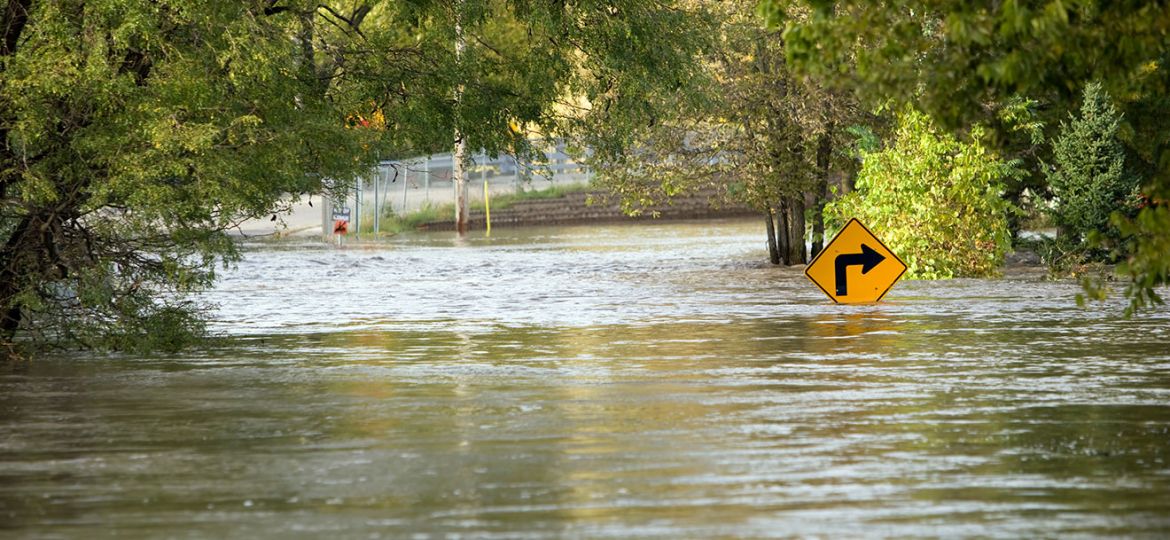
Flooded River Over a City Street

09 Jan: Are You Safe from Flooding?

The answer is No (and Yes).
Last July 16th, a summer rainstorm swept into Southern Ontario and seemed to pause over Toronto. Three hours later, flooding had displaced 500,000 people and caused damage that experts say could reach $4 billion (including $990 million of insured losses). That’s roughly $1.3 billion per hour of rain. A month later, another once-in-a-century storm hit Ontario just days after catastrophic flooding in Quebec resulted in over 70,000 insurance claims